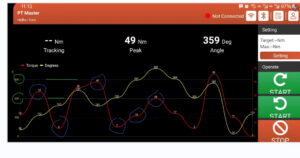
Why Calibration is Non-Negotiable
Accuracy Guaranteed: Understanding Calibration for Your High-Torque Cordless Wrench The

Cordless Torque Wrenches have revolutionized industrial bolting. They replace cumbersome hydraulic and pneumatic systems, offering freedom of movement, precise force (up to 6000 ft-lbs and beyond), and digital data control. However, their immense power and portability demand a revised and strict approach to employee safety.
Safety with high-torque digital tools is not just about physical protection-it’s about protecting the quality of the job.
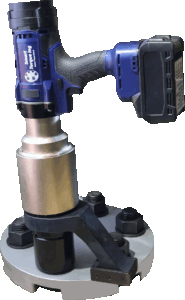
High-torque tools, even battery-powered ones, generate tremendous reaction force. This is the single biggest risk.
Proper Use of the Reaction Arm: Always ensure the wrench’s Reaction Arm is positioned firmly and securely against a strong, approved anchor point. Never brace it against a loose structure or against critical components that could be damaged.
Safe Stance: Use a two-handed grip (where possible) and maintain a wide, stable base (feet slightly apart). Avoid working in a position where the reaction force could push you towards an obstacle or cause a fall.
Never Hand-Hold the Force: Strictly prohibit absorbing the reaction force with the operator’s hands or body. Injuries to the back, shoulders, or fractured bones can be severe and life-altering.
Structural safety depends on torque accuracy. Deviation from the required torque is a safety failure: over tightening leads to bolt fatigue and breakage; under tightening leads to loosening and joint failure.
Calibration Verification: Always ensure the wrench’s NIST Traceability certificate is current (typically checked every 6-12 months or 5,000 cycles).
Adhere to the 20%–100% Rule: Remember the “20% Rule”—using the tool below 20% of its maximum capacity can lead to significant inaccuracy (as previously discussed), which is a core safety failure in the assembly process.
Torque Lock: On Digital Torque Wrenches, always utilize the torque lock feature after setting the desired value to prevent accidental changes during operation.
The cordless transition eliminates tripping hazards from hoses and reduces electrical risk, but introduces new battery hazards:
Battery Handling: Use only manufacturer-approved batteries and chargers. Avoid exposing battery packs to excessive heat (above 122 °F or 50°C or high moisture.
Avoid Wet Conditions: Although the tool is battery-powered, do not operate it in wet environments or where there is a risk of electrocution or damage to the battery pack.
Even with the reduced noise and vibration of modern Brushless Motor tools, protective gear is non-negotiable:
Safety Glasses: Mandatory protection against flying debris or shattered components (bolt or socket failure).
Gloves: Use high-quality, vibration-dampening mechanic gloves.
Certified Sockets: Never use manual sockets. Only use Impact-Rated Sockets (typically black finish) designed to withstand the immense forces generated by high-torque tools.
Workspace Organization: Maintain a clean work area, free from the tripping hazards of old hydraulic hoses, to reduce the risk of falls and maintain focus.
The Cordless Torque Revolution enhances efficiency, but the potential hazards of high power remain. A culture of safety requires rigorous adherence to proper reaction arm placement, strict adherence to the NIST calibration schedule, and disciplined use of PPE. By treating the digital precision of these tools as a core safety feature, industries can maximize both output and employee well-being.
Accuracy Guaranteed: Understanding Calibration for Your High-Torque Cordless Wrench The
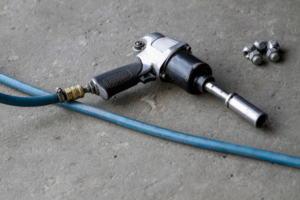
Why High Torque Cordless Wrenches are Replacing Hydraulic Tools The
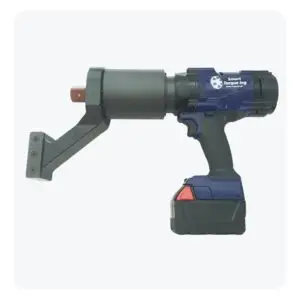
For decades, the realm of high-torque bolting—the tightening of critical